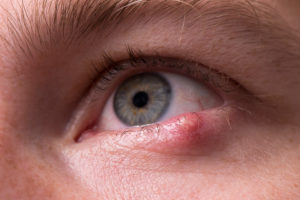
If you’ve ever had a stye, you know how uncomfortable they can be. The tenderness, swelling, and irritation along the eyelid can make even blinking unpleasant.
As ophthalmologists, we often reassure patients that styes are common and usually harmless, but if you keep getting them, it’s worth talking about prevention. The good news is that most styes can be avoided with simple, consistent eyelid hygiene and care.
A stye (also called a hordeolum) is a small, painful red bump that forms along the edge of the eyelid. It develops when an oil gland or eyelash follicle becomes blocked and infected with bacteria.
Styes may look like a pimple and can cause eyelid tenderness, redness and swelling, a bump along the lash line, mild tearing and sensitivity to light. Most styes improve on their own within a week, especially with warm compresses.
If you experience recurrent styes, there is often an underlying issue such as:
Blepharitis is a common condition involving inflammation of the eyelid margins. It frequently contributes to repeated styes because it disrupts normal oil gland function. If styes are recurring, evaluating for blepharitis is an important step.
Prevention focuses on keeping the eyelids clean and the oil glands functioning properly. These are the strategies we recommend most often.
Think of eyelid hygiene like brushing your teeth, a small daily habit that prevents bigger problems. Gently clean your eyelids once daily with diluted baby shampoo or commercially prepared eyelid cleansing wipes, then rinse thoroughly and pat dry. This is especially important if you wear makeup, have oily skin, or are prone to blepharitis.
This is one of the simplest and most effective stye prevention strategies. Warm compresses help unclog oil glands before they become blocked. Apply a clean, warm (not hot) compress to closed eyelids for 5–10 minutes. Repeat several times per week if you are prone to styes.
Makeup can trap bacteria and block oil glands if not managed properly. Remove all eye makeup before bed, replace mascara and eye liner every 3-6 months, avoid sharing eye makeup and clean brushes regularly.
Our hands can carry bacteria, and touching or rubbing your eyes transfers those bacteria directly to the eyelid glands. Frequent handwashing and avoiding unnecessary eye contact go a long way toward prevention.
Poor contact lens hygiene increases the risk of eyelid infections. If you wear contact lenses, wash your hands before inserting or removing lenses. Clean your contact lenses properly and store them in a clean case.
While a dirty pillow alone does not directly cause a stye, bacteria can accumulate on fabrics and transfer to your eyelids. Change your pillowcases frequently and avoid sharing towels.
Chlorine and other chemicals can irritate the eyelids and disrupt the tear film. After swimming, gently rinse your eyelids with clean water.
The oil glands in your eyelids function better when your diet includes healthy fats. Omega-3 fatty acids – found in fatty fish (salmon, sardines), flaxseed, chia seeds and walnuts – may help support healthy tear production and oil gland function.
Early symptoms of a stye include localized tenderness along the lash line, mild swelling, a small red bump and a sensation of heaviness in the eyelid. If you notice early signs of a stye forming, begin warm compresses immediately. Early treatment often prevents a full stye from developing or at least can shorten the course.
Stress itself does not directly cause styes. However, stress can affect immune function and may make you more prone to infections. In addition, during stressful periods, people may rub their eyes more frequently or neglect eyelid hygiene.
Styes are not highly contagious, but the bacteria that cause them can spread through shared towels, shared makeup and poor hand hygiene.
Schedule an evaluation if your stye does not improve after 1-2 days, swelling worsens, you notice vision changes, styes recur frequently, or if the redness spreads beyond the eyelid. Your eye doctor can prescribe appropriate medication which can speed the prognosis. Recurrent styes may signal underlying blepharitis or oil gland dysfunction, both of which can be treated effectively.
If you live in the Washington DC area, and you find yourself dealing with repeated styes, the doctors at Washington Eye Physicians and Surgeons are here to help. Schedule a consultation to identify the underlying cause and provide a personalized plan to keep your eyelids healthy.
© 2026 Washington Eye Physicians & Surgeons
The material contained on this site is for informational purposes only and is not intended to be a substitute for professional medical advice, diagnosis, or treatment. Always seek the advice of your physician or other qualified health care provider.